
Have you ever thought about how one kick can change the whole game? Free kicks in football are key in keeping things fair after a foul. One slip-up can turn the tide, but clear rules make sure every kick is set up right.
In this post, we break down the basics of free kicks and why they matter so much. Get ready to see how a small rule can pave the way for some truly big plays on the field.
Fundamentals of the Free Kick Rule in Football
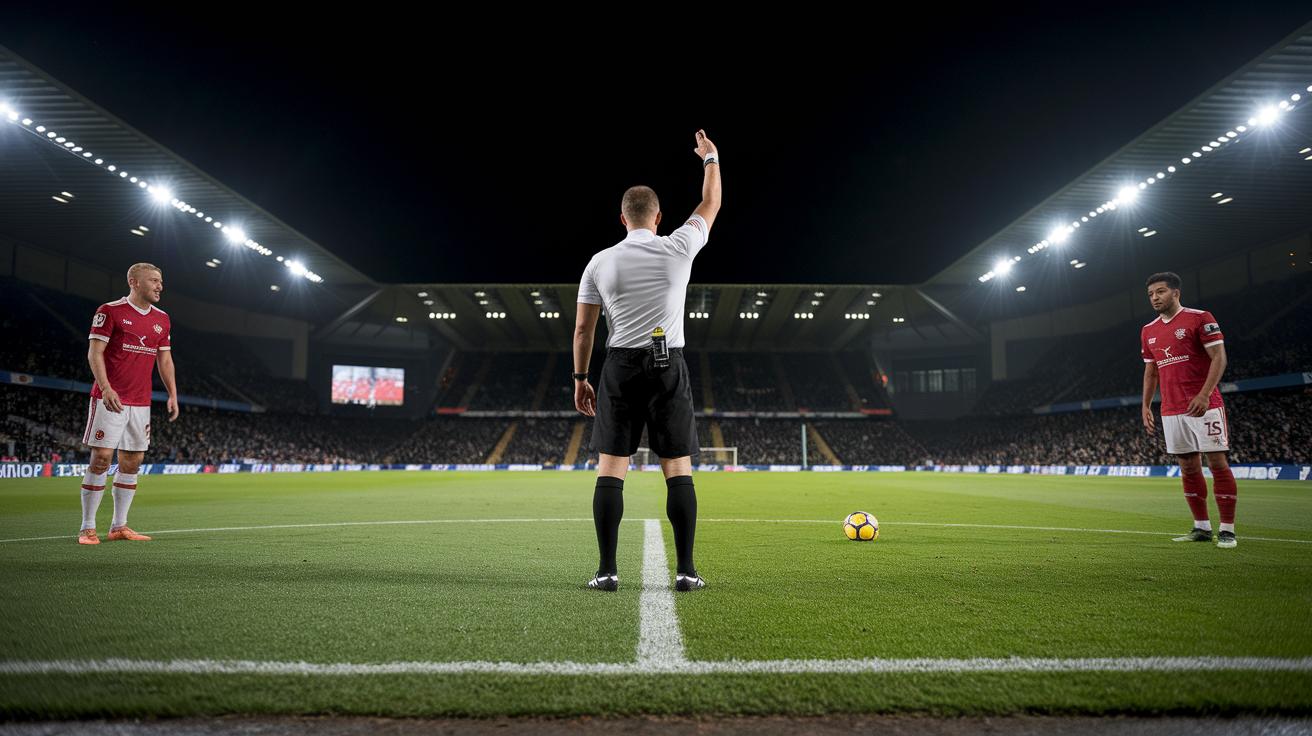
When a player breaks the rules by tripping or handling the ball illegally, the referee stops play and awards a free kick. This gives the other team a chance to restart the game with a kick. Picture this: a player is fouled near the penalty area, and the referee points out the free kick spot so play can resume right away.
Before anyone takes the kick, the ball must be completely still. The referee then signals that it's time to start, and the opposing players must stand about 10 yards away. Imagine all players lined up at the right distances to ensure a fair restart as the ball sits perfectly at rest.
There are two main types of free kicks: direct and indirect. A direct free kick lets a player score a goal straight away, without needing another touch. In contrast, an indirect free kick requires a second touch before a goal counts. Sometimes both teams agree on a quick restart, while other times they set up a more formal kick with a wall of defenders blocking the path. Think of a player taking a direct free kick, eyeing the goal and making a decisive attempt to score.
Direct vs Indirect Free Kick Rules in Football
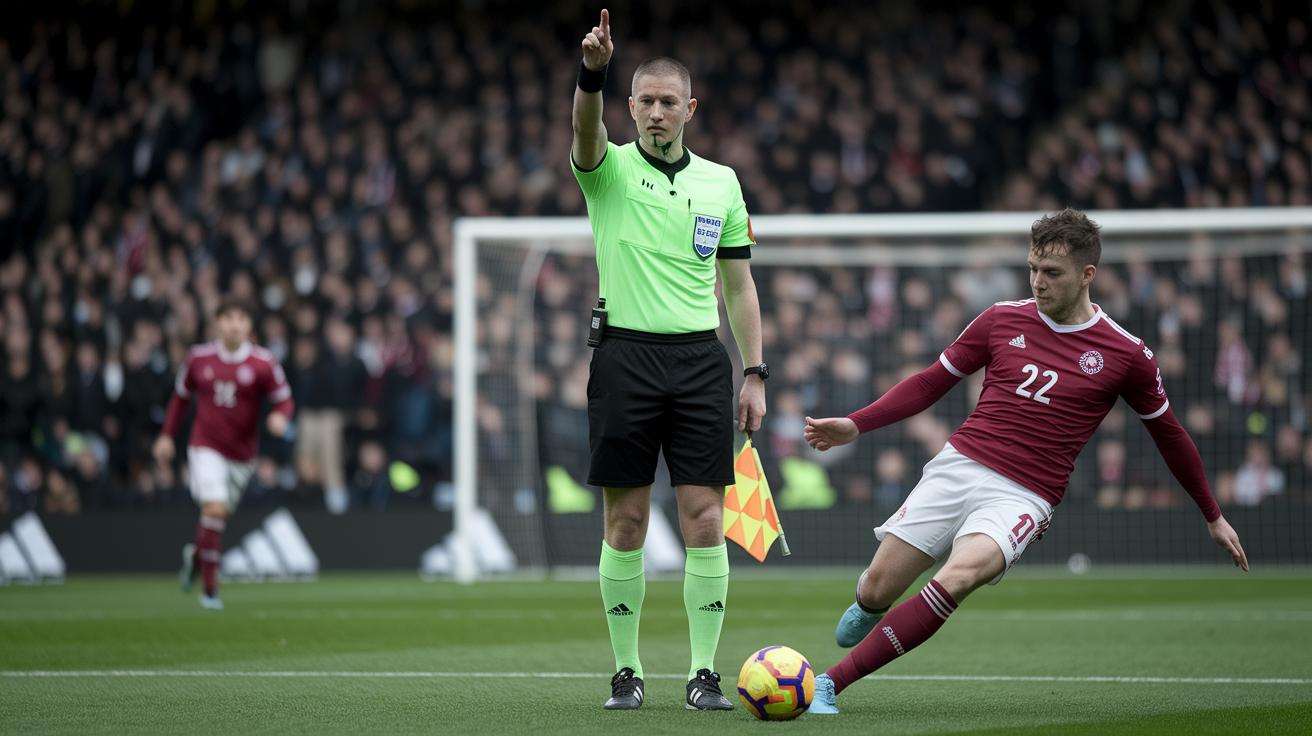
When a foul happens, a free kick restarts play. Knowing the difference between these kicks can really clear up how teams set up their scoring chances. Each kick type has its own referee signal and unique game situation.
Direct Free Kick
With a direct free kick, players can aim straight at the goal. The referee signals this by pointing their arm downward after a foul like tripping, handball, or a push. Imagine a defender committing a rough push near the penalty area, that results in a direct free kick and gives the attacking team a quick shot at goal.
Indirect Free Kick
An indirect free kick means a goal can only happen if another player touches the ball after it’s kicked. The referee raises their arm to show that a second touch is needed. This type of kick is usually given for offenses like dangerous play or offside. Think of moments when teams are gathering near the penalty box to get organized, this is when an indirect free kick comes into play.
In short, rough or severe fouls typically lead to a direct kick for an immediate scoring chance, while less clear-cut offenses call for an indirect kick, allowing time for a carefully planned play.
Procedures and Positioning for Free Kicks in Football
The setup for a free kick starts with the ball being completely still when the referee blows the whistle. This rule has been around for ages to keep things fair, kind of like hitting the reset button at a crucial moment. When the whistle sounds, both teams get a clear signal that the game is ready to resume.
Teams have since gotten creative with their free kick plays. Some opt for a quick restart to catch the other side by surprise, while others form a defensive wall at least 10 yards away, almost like drawing up a fast play in a timeout. Experts note that different league rules and the game situation can change these tactics. At tense moments, a quick kick can feel like a sudden burst of energy, much like a last-second score in a nail-biting finish.
- Opponents must stay at least 10 yards away until the ball is in play.
- The ball must be completely still before the kick.
- The referee’s whistle marks the restart.
- A quick kick is allowed if both teams agree.
- For a ceremonial restart, teams line up the wall and wait for the clear whistle.
NFL Free Kick Rule in Football: Fair Catch Kick Explained

After a fair catch or when interference disrupts a fair catch, teams have a unique chance to switch things up. Instead of taking a regular down, a team can go for a free kick field goal right from where the catch happened. This kick can be done as either a drop kick or a place kick without using a tee. If there's a penalty, say, a 15-yard penalty when the catch happens in the end zone, the ball is moved accordingly. When that kick sails through the uprights, the team scores three points. It’s a rarely used play that adds another layer of strategy for coaches during a game.
Drop Kick Execution
A drop kick means dropping the ball and kicking it after it bounces off the ground. It takes precision and perfect timing to ensure the ball stays on course through the uprights. Because it demands both power and finesse, drop kicks are hard to pull off and aren’t seen very often. It’s a rare moment that can light up a game when it works.
Place Kick Execution
With a place kick in this scenario, everything revolves around precise setup. No tee is used here, so the ball must be spot-on when placed on the ground. The holder gets the ball ready while the kicker looks for the right moment after the snap. Coaches favor the fair catch kick when field position, the game clock, and even the weather all line up to give their kicker a shot at those three precious points.
Historical Usage and Records of the Free Kick Rule in Football
NFL records tell us that fair catch kicks have always been a quirky and memorable part of the game. Imagine the sting of a clock ticking down, and a team decides to take a high-risk shot for a three-pointer. With seven kicks made out of at least 29 tries, these plays have popped up at crucial moments, adding a spark of unpredictability that fans still talk about today.
It’s like those unforgettable plays you see when a team goes bold in a crunch moment. Icons like Curly Lambeau back in 1921 and several daring attempts in the 1960s and 1970s remind us that football is full of surprises. Whether a coach decides to risk it for points or holds back due to time constraints, each fair catch kick adds another twist to the evolving story of the game.
| Year | Player | Team | Outcome |
|---|---|---|---|
| 1921 | Curly Lambeau | Evansville Crimson Giants | Made |
| 1966 | Lou Michaels | Baltimore | Missed |
| 1971 | Bobby Howfield | New York Jets | Missed |
Each of these moments shows just how unpredictable and thrilling football can be. Whether you’re a die-hard fan or a newcomer to the sport, these rare plays invite you to appreciate the daring spirit that keeps the game alive and kicking.
Strategies and Practical Tips for the Free Kick Rule in Football

When your team earns a free kick in soccer, it is all about pairing sharp accuracy with a dash of trickery. Coaches set up a wall of defenders at a set distance while a decoy player makes a run to pull the opponents away. This careful plan helps place the ball right where the kicker can use both power and precision. Sometimes, coaches even adjust the wall's spot to catch the rival team off balance. Picture a decoy sprinting away, leaving the main kicker with a clear view of the goal for that perfect shot.
Switching to NFL fair catch kicks, timing and field position really matter. In these high-risk plays, teams check the kicker’s range and even take the wind's speed and direction into account because it can push the ball off course. I remember a moment from 2019 when Joey Slye lined up for a 60-yard kick with just one second on the clock. In these tense situations, coaches carefully weigh the field conditions and the kicker’s strength before making the call to go for it.
Final Words
In the action, we journeyed through the essentials and tactics behind free kicks in football, spotlighting both direct and indirect methods and the simple yet crucial procedures for set plays. The article broke down the free kick rule in football, explained strategic setups, and revisited memorable historical moments. Each section aimed to bring clarity and a spirited recap of how set-piece rules can shape game outcomes. Enjoy the insights and keep the excitement alive on and off the field.
FAQ
What is a free kick in American football?
The free kick in American football, known as the fair catch kick, allows a team to attempt a field goal from the spot of the fair catch without interference from the opposing team.
How many points is a free kick field goal in the NFL?
The free kick field goal in the NFL scores three points, matching the value of a standard field goal and offering a unique scoring opportunity under specific game scenarios.
What are the basic rules for a free kick in the NFL?
The NFL free kick rule permits a team to use a fair catch to establish a free kick from the line of scrimmage, with opponents required to stay at a set distance until the ball is in play.
How do the rules differ between direct and indirect free kicks?
Direct free kicks allow a goal to be scored directly with an arm signal pointing downward, while indirect free kicks need a second touch before scoring and are signaled by a raised arm.
What are the quick free kick rules and when can they be used?
Quick free kicks enable a rapid restart if both teams agree, requiring proper positioning and adherence to the referee’s signal to ensure fair play on the field.
Why did the Chargers get a free kick at the end of the half?
The Chargers likely earned a free kick at the half’s end due to a fair catch or a penalty by the opposing team, giving them the chance to attempt a field goal under controlled conditions.