Events
Most Iconic Moments in Sports That Gave Us Chills
Ranking the 10 most iconic moments in sports, from shocking upsets to legendary celebrations. See which plays still give us chills.

Can one play really be more iconic than an era-defining upset, a record that rewired a sport, or a celebration that changed culture?
This list answers that by ranking the ten single moments that still give us chills—chosen for historical impact, athletic difficulty, drama, global reach, and lasting legacy.
Read on to relive the shocks, the small details that became legend, and exactly why each moment still matters.
The Definitive Cross-Sport Top 10 Ranking
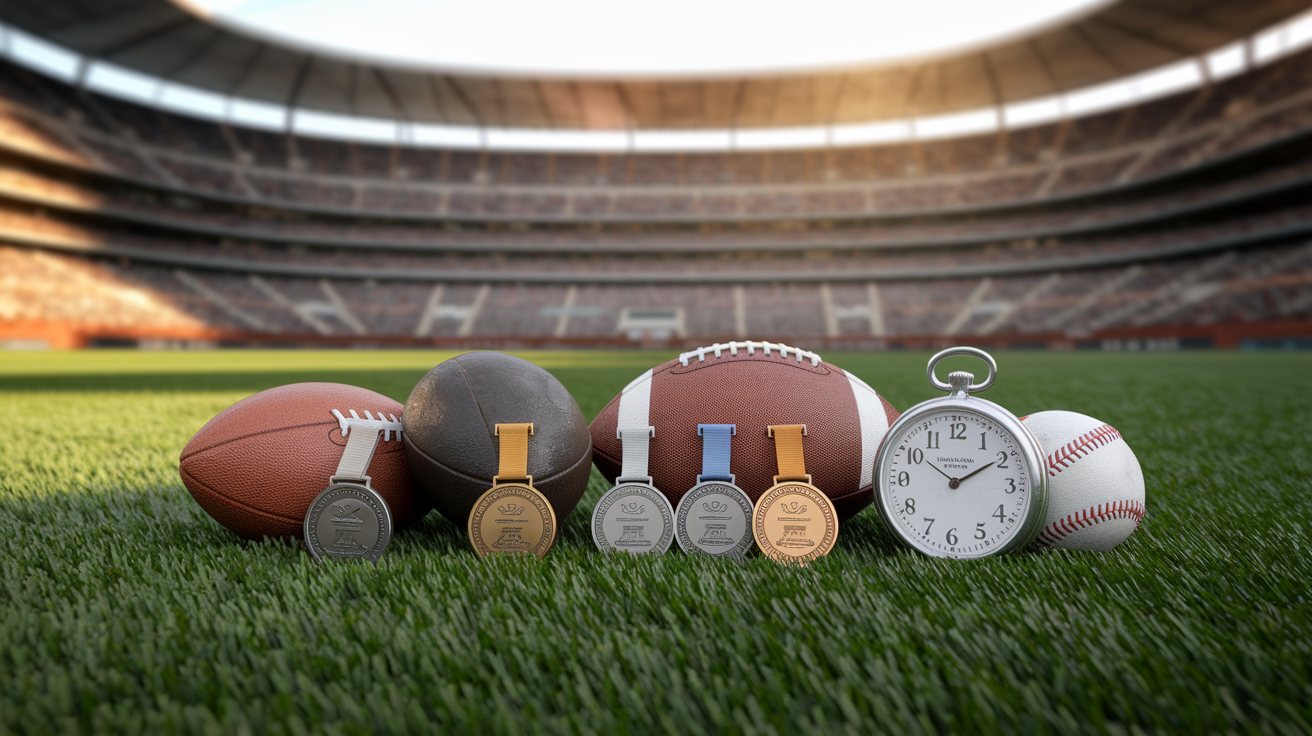
Historical impact, athletic difficulty, drama, global recognition, and lasting legacy decide the order below, not personal preference or home country bias.
-
Miracle on Ice, February 22, 1980 (ice hockey). The USA stunned the USSR 4 to 3 at Lake Placid in a Cold War era upset that still gets replayed every February. It remains the gold standard for the word miracle in sports, a tag earned by beating a team that had barely lost anything in a decade.
-
Jesse Owens’ four gold medals, Berlin 1936 (track and field). Owens won the 100m, 200m, long jump, and 4x100m relay in front of Adolf Hitler’s regime. The achievement carried a political weight that few sporting feats ever will.
-
Maradona’s two goals, June 22, 1986 (football). The “Hand of God” and the “Goal of the Century” happened four minutes apart in the same match. Argentina beat England 2 to 1, and one player authored both the most notorious and most celebrated goals in World Cup history.
-
Roger Bannister’s sub four minute mile, May 6, 1954 (track and field). Bannister ran 3:59.4, breaking a barrier many doctors thought was physically impossible. Within two months, another runner also broke four minutes, proving the limit had been mental as much as physical.
-
Bob Beamon’s long jump, October 18, 1968 (track and field). Beamon leapt 8.90 metres in Mexico City, smashing the world record by 55 centimetres. The jump was so far beyond expectation that officials needed a manual tape measure because the electronic device couldn’t read that far.
-
Buster Douglas knocks out Mike Tyson, February 11, 1990 (boxing). A 42 to 1 underdog stopped the most feared heavyweight on the planet in round 10. It’s still the reference point whenever anyone talks about a true sporting shock.
-
USA beats China on penalties, July 10, 1999 (football). The Women’s World Cup Final ended with Brandi Chastain’s shootout winner and a celebration that became one of the most reproduced images in sports photography. It changed how women’s football was marketed and watched.
-
Michael Phelps wins eight golds, Beijing 2008 (swimming). No swimmer, and arguably no Olympian, had ever dominated a single Games quite like this. Eight events, eight golds, zero margin for error.
-
Leicester City’s Premier League title, May 2, 2016 (football). A club priced at roughly 5,000 to 1 before the season won England’s top flight outright. It remains the benchmark for underdog stories in modern team sports.
-
Chicago Cubs win the World Series, November 2, 2016 (baseball). An 8 to 7 win in 10 innings over Cleveland ended a 108 year title drought. Grown adults cried watching a baseball game, and honestly, who could blame them.
Comparing a mile time to a penalty shootout, or a 1936 medal count to a 2016 betting line, will always involve some subjectivity. But these 10 moments share something rare. Each one reached beyond its own scoreboard and became part of how people remember sports history itself.
How the Ranking Was Decided
(((alt-img2)))
An iconic moment isn’t just an exciting play. Plenty of games have thrilling finishes that nobody remembers five years later. What separates a genuinely historic moment is a mix of sporting difficulty and consequences that stretch past the final whistle, into culture, politics, or how an entire sport gets played and watched afterward.
The scoring behind this list leans on four weighted categories. Historical impact carries 40% of the weight, covering how much a moment changed its sport, its country, or its era. Records and statistics make up 25%, meaning verified numbers like times, distances, and scores matter more than vague claims of greatness. Global viewership and media reach account for 20%, since a moment nobody watched is harder to call iconic no matter how impressive it was. Cultural and legacy influence rounds out the final 15%, capturing whether a moment still gets referenced, replayed, or taught decades later.
Comparing a 1936 Olympic sprint to a 2016 Premier League title race means adjusting for the fact that older moments had far less camera coverage and far fewer living witnesses. The weighting tries not to punish pre television events just because footage is grainier or viewership numbers weren’t tracked the same way.
Every date, score, and statistic cited here has been checked against official competition records, archival broadcast footage, and reporting published at the time of the event. Where exact figures like attendance or odds vary slightly between sources, the most widely cited and verifiable numbers are used.
Olympic and Track Performances That Redefined Athletic Achievement
(((alt-img3)))
Olympic and track events turn abstract greatness into something you can hold in your hand. A time, a distance, a medal count. That’s partly why these moments age so well. A 9.58 means the same thing in 2009 as it will in 2050.
Jesse Owens won four gold medals at the Berlin Olympics in August 1936, taking the 100m, 200m, long jump, and 4x100m relay. He did it in a stadium built to showcase Nazi ideology, in front of a regime that had publicly promoted theories of racial superiority. The medals themselves were remarkable athletic achievements, but the setting turned them into a statement that outlived the Games.
Roger Bannister ran 3:59.4 for the mile on May 6, 1954, becoming the first person officially recorded under four minutes. Before that day, the four minute mile was treated almost like a wall, something runners approached but never crossed. Bannister’s run didn’t just break a barrier, it broke the idea that the barrier was permanent, and other runners started clocking sub four times soon after.
Bob Beamon jumped 8.90 metres at the Mexico City Olympics on October 18, 1968, beating the existing world record by 55 centimetres. To put that gap in perspective, world records in the long jump typically improve by a few centimetres at a time. Beamon’s jump was so far outside the expected range that it stood for 23 years.
Michael Phelps won eight gold med
Final Words
Right in the heat of the action, we ranked ten moments by historical impact, records, drama, media reach, and lasting legacy.
The list brings together the Miracle on Ice, Owens in Berlin, Maradona’s 1986 brace, Bannister’s sub-four, Beamon’s leap, Douglas’s upset, the 1999 USWNT penalty win, Phelps’ eight golds, Leicester’s title, and the Cubs’ Game 7 — then we laid out the method, sport-by-sport accounts, records table, emotional vignettes, and photo/video placement.
These most iconic moments in sports still teach, surprise, and lift us — and that’s why these stories stick around.
FAQ
Q: How were the top 10 moments ranked?
A: The top 10 moments were ranked using weighted criteria: historical impact 40%, records and statistics 25%, global viewership 20%, and cultural or legacy influence 15%.
Q: Why were these specific ten moments chosen?
A: These ten moments were chosen for their mix of athletic difficulty, drama, lasting legacy, global recognition, record-setting performances, and broader political or cultural impact.
Q: How were dates, scores, and statistics verified?
A: Dates, scores, and statistics were verified against official records, archival footage, primary statistical sources, and contemporaneous reporting before being accepted for the ranking.
Q: Why include politically or culturally significant moments like the Miracle on Ice and Jesse Owens?
A: Politically and culturally significant moments are included because their effects extended beyond sport—shaping national identity, public memory, and social conversations as well as athletic history.
Q: How do you compare Olympic and track performances with team-sport moments?
A: Olympic and track performances are compared using measurable metrics—times, distances, medal totals—then balanced with drama and historical reach so individual marks and team achievements read fairly across sports.
Q: Why is Maradona’s 1986 quarterfinal listed among the greatest moments?
A: Maradona’s 1986 quarterfinal is listed because his “Hand of God” and “Goal of the Century” combined genius, controversy, and a match-winning impact that still shapes World Cup storytelling.
Q: What makes Leicester City’s title and the Chicago Cubs’ win so iconic?
A: Leicester’s roughly 5,000–1 title and the Cubs’ end to a 108‑year drought are iconic for their extreme underdog narratives, emotional payoff, and lasting place in football and baseball history.
Q: How should photos and video clips be placed alongside the article?
A: Photos and video clips should sit immediately beside each ranked entry or its sport account, using stills for key images and 30–180 second clips for actions that need motion and commentary.
Q: Which records appear in the “Landmark Sporting Records at a Glance” table?
A: The table lists Bannister (3:59.4 mile), Beamon (8.90m long jump), Bolt (9.69s Olympic, 9.58s world record), Phelps (eight golds), Ripken (2,632 consecutive games), and Bryant (81 points).
Q: Aren’t sports comparisons across eras subjective?
A: Yes, comparisons across eras are subjective; this list still aims for transparency by balancing measurable records, cultural reach, dramatic context, and verified historical impact.
More from Politics
 Events
Most Memorable Underdog Upsets in Olympic History
 Analysis
Set-Piece Mastery: Decoding Corners and Free-Kicks Tactically
 Analysis
Statistical Metrics That Truly Define Midfield Mastery
 Analysis