Analysis
Set-Piece Mastery: Decoding Corners and Free-Kicks Tactically
Set-piece analysis goes deeper than scorelines. A 7-step method for breaking down corners and free-kicks: blockers, decoys, delivery, and second-ball chaos.

Is judging a corner by the scoreline lazy?
It is, and it misses almost everything useful.
Corners and free kicks are a short chain of decisions: the setup before the kick, the delivery and first contact, then the second-ball that decides whether a counter starts or a shot follows.
This piece offers a seven-step diagnostic and a simple data-led tagging method to break those phases down.
Read on to learn how to spot real value in blockers, decoys, and delivery zones, so coaches, analysts, and fans get smarter about dead-ball play.
A Seven-Step Diagnostic for Dead-Ball Situations
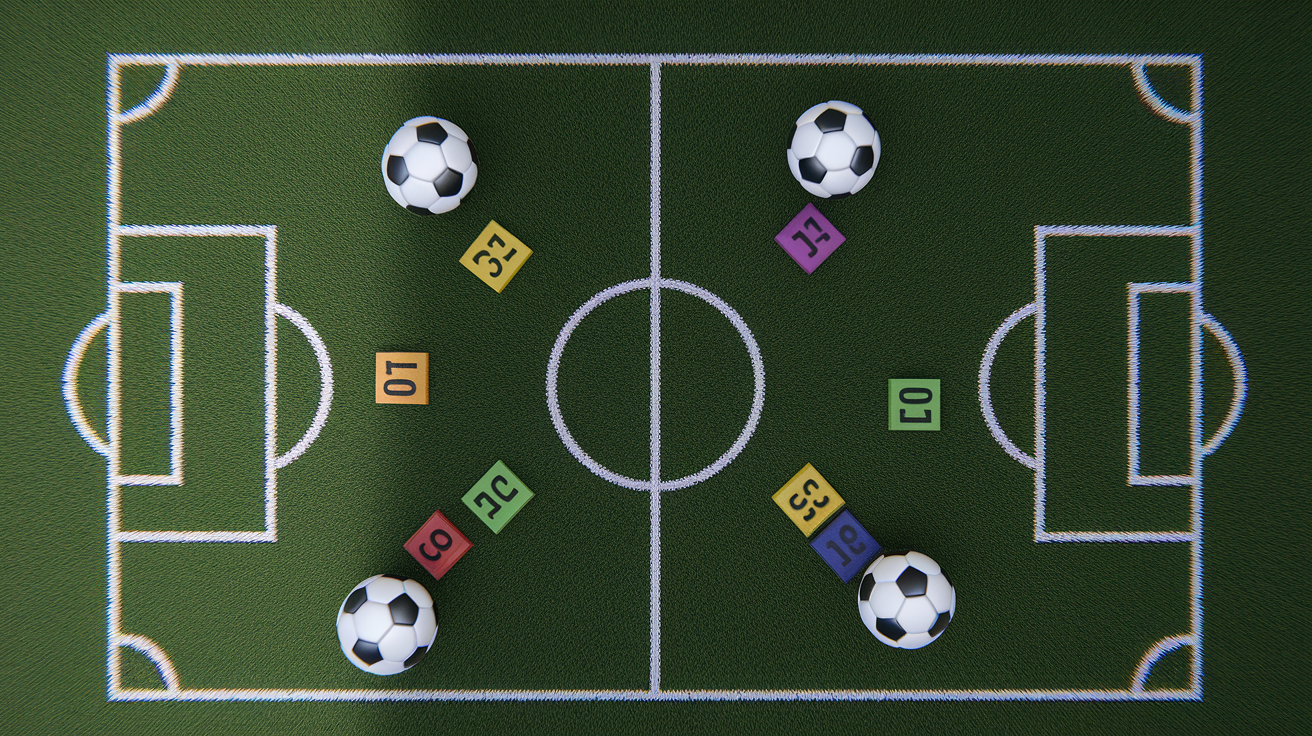
A corner or free kick should never be judged by one simple question: did it end in a goal? That’s the lazy way to watch it, and it misses almost everything useful. A dead-ball situation is a sequence. A small chain of decisions and movements that starts well before the kick is taken and doesn’t finish until the ball is either in the net, cleared, or the defending team has broken away. Judge it only on the scoreline and you’ll miss the blocker who did his job perfectly, or the marker who got dragged out of position three seconds before contact.
Every dead-ball sequence breaks into three phases. First, the setup before the kick, where attackers and defenders organize into their starting shapes. Second, the delivery and first contact, the moment the ball is struck and either flicked on, headed clear, or won by an attacker. Third, the second-ball or transition phase, where loose balls get fought for and possession turns into a shot, a clearance, or a counter-attack the other way. Keep these three phases in mind. The video-coding section later in this piece builds directly on them.
Use this checklist on any corner or free kick, attacking or defending:
- Where is the restart taking place, and what does that location make possible?
- How many attacking players are committed, and where are they allocated (box, short option, edge)?
- What defensive marking system is in place: zonal, man-to-man, or a mixed setup?
- What type of delivery is used, and which zone is it aimed at?
- What movement, blocking, or screening happens before the ball arrives?
- What is the result of first contact, won cleanly, flicked on, or cleared?
- What happens in the second-ball phase? Does it produce a shot, a clearance, or a transition?
Most corner setups you’ll see use something close to 6 to 9 attacking players, often split as 5 to 7 in the box, 1 to 2 as short options, and 1 sitting on the edge. Free-kick analysis needs one more distinction up front: is this a direct shot, or an indirect combination building toward one? Answer that early and the rest of the diagnostic falls into place.
A Data-Led Set-Piece Analysis Method for Match Footage
(((alt-img2)))
Turning a few good highlights into a real dataset means treating every corner and free kick the same way, every time. Using the three phases already established, setup, delivery and first contact, and the second-ball or transition, create one linked clip per dead-ball event. Start the clip several seconds before the restart, while players are still organizing, and don’t cut it off until possession is fully settled, whether that’s a goal, a clearance, or a counter-attack starting to form. Watch it once at normal speed to get the shape of the sequence, then go frame by frame using a wide tactical angle. A behind-goal angle, when it’s available, is worth the extra look since it shows blocking runs and goalkeeper positioning that the broadcast camera often misses.
Tagging needs a consistent order so nothing gets skipped. Timestamp the restart itself, freeze the frame at the taker’s approach, and map where every attacker and defender is standing. From there, mark the movement triggers, the moment a decoy run starts or a blocker steps into a marker. Label the delivery type and its target zone, then apply the final outcome code. Shots, shots on target, goals, goalkeeper interventions, clearances, retained possession, and counter-attacks should all exist as standardized labels in your system. Save the question of what counts as a “good” rate for the statistics section further down. This stage is purely about clean, repeatable tagging.
Naming conventions matter more than people expect. Decide early what “far post” means in metres, what counts as “dynamic” versus “static” organization, and write it down so every clip gets coded the same way weeks later. Screens, deflections, camera cuts, and multi-phase attacks (a corner that gets half-cleared and comes back in) are the biggest threats to automated tagging accuracy. When any of those show up, check the tag by hand. It’s also worth having a second analyst review a sample of clips before you aggregate anything. Inconsistent labels are easy to introduce and hard to spot once they’re buried in a spreadsheet of 200 corners.
Once a few matches’ worth of clips are coded, patterns start to show up in corner zoning maps, positioning heatmaps, run paths, and delivery plots. A coaching dashboard pulling from this data can show, at a glance, where a team’s deliveries cluster and which zones are actually productive versus which just look busy. One annotated tactical diagram is worth building here: ball path, active attackers, decoys, blockers, defenders, the goalkeeper’s starting position, and who’s covering the edge of the box. That single image usually communicates more to a squad than three pages of notes.
Attacking Corner Kick Tactics, Delivery Zones, and Movement Patterns
(((alt-img3)))
Good attacking corners aren’t about swinging the ball in and hoping. They’re built to create one free runner, or at least one contact that favors the attacking team, while keeping the rest-defence structure completely separate from the chaos in the box.
Corner Delivery Types and Target Zones
An inswinger curls toward goal and gives the goalkeeper the hardest decision, come and claim it or stay and react. An outswinger moves away from goal, which is safer for the goalkeeper but can set up a driven far-post header. A flat, driven cross arrives fast and low enough that defenders barely get a jump on it, while a low cut-back strikes into the six-yard area along the ground, useful against teams set up purely for aerial duels. A deep floated ball drifts toward the back post, usually for an overload rather than a first-time finish.
The taker’s foot tells you most of what you need to know before the ball is even struck. A right-footed taker on the left corner naturally produces an inswinger, a left-footed taker on the same side produces an outswinger. Watch the run-up angle, body shape, and contact point. An open body and a strike across the ball usually means curl is coming. Picture a three-panel diagram here: the near-post zone (0 to 5 metres from the post), the penalty-spot area (10 to 12 metres out), and the far-post zone (16 to 18 metres), each with its own likely delivery type layered on top.
#
Final Words
A whipped corner meets a run, and dead-ball moments prove they’re sequences, not one-off luck. This piece laid out a seven-step diagnostic, a repeatable video-coding method, attacking and defensive corner tactics, free-kick technique and wall planning, stats benchmarks, opponent scouting, training progressions, and matchday role rules.
Take the checklist onto the training pitch and into your clip library. Test routines, compare them to the stats framework, and keep things simple on matchday.
This practical guide to set-piece analysis breaking down corners and free-kicks in football is meant to be used, tested, and improved — you’ll see gains.
FAQ
Q: What is the stupidest rule in football?
A: The stupidest rule in football is subjective; many fans point to offside’s fine margins and inconsistent VAR interpretation, which can decide games on tiny, unclear calls rather than clear sporting moments.
Q: Are corners considered set pieces and what are examples of set pieces?
A: Corners are considered set pieces; other examples include direct and indirect free-kicks, penalties, throw-ins, and rehearsed goal-kick routines — all restart moments teams can plan and practice.
Q: What is the 4 corner model?
A: The 4 corner model divides the penalty area into four target zones — near post, central (penalty-spot), far post, and edge-of-box — to assign attacking runs and defensive coverage for corners.
More from Politics
 Events
Most Memorable Underdog Upsets in Olympic History
Analysis
Set-Piece Mastery: Decoding Corners and Free-Kicks Tactically
 Analysis
Statistical Metrics That Truly Define Midfield Mastery
 Analysis