Events
Most Memorable Underdog Upsets in Olympic History
Seven real Olympic upsets, from barefoot gold to the Miracle on Ice, where favorites actually lost and history got rewritten for good.
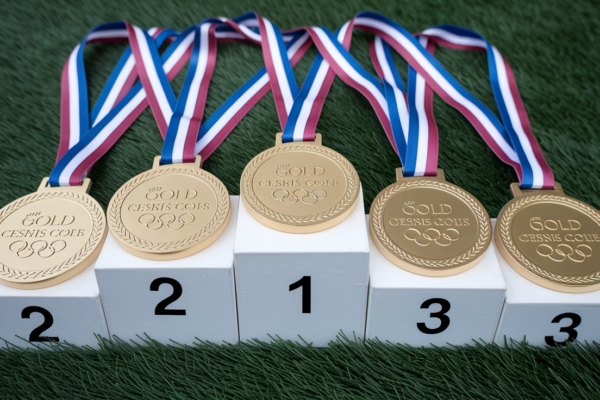
What if I told you the Olympics’ most famous moments came from absolute underdogs—barefoot marathoners, college kids beating world powers, and forgotten wrestlers toppling legends?
This is a look at seven shocks where the favorite actually lost, not near misses or moral victories—real wins that rewrote the record books.
We’ll hit the Miracle on Ice, Abebe Bikila’s barefoot marathon, Rulon Gardner’s wrestling upset, Billy Mills’ 10,000m, Steven Bradbury’s last-lap luck, Argentina toppling the U.S. basketball team, and Japan’s softball surprise.
Each story shows how one moment—timing, heart, or plain luck—can change sports history.
Quick Answer: Seven Olympic Shocks That Ended in Victory
Every underdog story on this list ends the same way, with the favorite losing. These aren’t moral victories or heartbreaking near misses. Each one finished with the underdog’s hand raised, the gold medal around the wrong neck, or a scoreboard nobody could’ve predicted when the event kicked off.
That distinction matters. Olympic history is full of brave losses and close calls that people remember fondly, but this list sticks to the ones where the underdog actually won. Here’s a quick scan of all seven before we dig into the full stories.
| Rank | Year and Event | Underdog and Favorite | Result | Why the Victory Was Improbable |
|---|---|---|---|---|
| 1 | 1980 Ice Hockey, Lake Placid | United States vs. Soviet Union | USA won 4-3, then beat Finland 4-2 for gold | A mostly amateur, college-aged American roster had lost 10-3 to the same Soviet team in an exhibition just weeks earlier |
| 2 | 2000 Greco-Roman Wrestling, Sydney | Rulon Gardner vs. Alexander Karelin | Gardner won 1-0 | Karelin was a three-time defending Olympic champion who hadn’t lost internationally in roughly five years |
| 3 | 1964 Men’s 10,000m, Tokyo | Billy Mills vs. Ron Clarke’s field | Mills won in an Olympic record 28:24.4 | Mills was a little-known runner who beat world-record holder Ron Clarke and favorite Mohammed Gammoudi |
| 4 | 1960 Men’s Marathon, Rome | Abebe Bikila vs. the established field | Bikila won barefoot in a world-best 2:15:16.2 | A late addition to Ethiopia’s team, internationally unknown, beat silver medalist Rhadi Ben Abdesselam while running without shoes |
| 5 | 2002 Men’s 1,000m Short Track, Salt Lake City | Steven Bradbury vs. Apolo Anton Ohno and the field | Bradbury won after all four rivals fell on the final lap | Bradbury had no realistic path to the podium against faster skaters until the entire field in front of him went down |
| 6 | 2004 Men’s Basketball Semifinal, Athens | Argentina vs. United States | Argentina won 89-81 | The Americans had won three straight Olympic titles with NBA talent and weren’t supposed to lose before the final |
| 7 | 2008 Women’s Softball Final, Beijing | Japan vs. United States | Japan won 3-1 | The three-time defending champion Americans had already beaten Japan twice in the same tournament |
Miracle on Ice: The Upset That Defined a Generation
(((alt-img2)))
The 1980 Winter Olympics landed right in the middle of the Cold War, and that context is impossible to separate from what happened on the ice at Lake Placid. On one side stood the Soviet Union’s hockey program, built on professional caliber players who trained together year round. On the other stood a roster of American college kids, most of them unknown outside their own campus rinks, coached by Herb Brooks into a team that had barely come together as a unit.
The Soviets weren’t just good. They were dominant in a way that made the gap feel almost theoretical. They’d won 8 of the previous 9 Olympic gold medals in men’s hockey, and their roster had been playing together for years as something closer to a national club team than a tournament squad. Just two weeks before the Olympics began, the two teams played an exhibition game in New York, and the Soviets crushed the Americans 10-3. There was no ambiguity about who was supposed to win when they met again. The United States entered as the 7th seed in a 12 team field, a detail that tells you everything about expectations.
On February 22, 1980, the two teams met again, this time in the medal round, a detail worth being precise about since the game is often mislabeled as a semifinal. It wasn’t a single elimination bracket moment. It was the opening game of a four team group where records carried forward. The Americans trailed twice in regulation before Mark Johnson tied it late in the first period and Mike Eruzione scored the eventual game winner midway through the third. From there, the U.S. defense had to survive ten minutes of relentless Soviet pressure, and it did, closing out a 4-3 win that still didn’t guarantee anything on the medal table.
That’s the part that gets lost sometimes. Beating the Soviets didn’t hand the United States gold. Two days later, on February 24, the Americans had to come from behind against Finland, eventually winning 4-2 to actually secure the medal. The win over the Soviets became the moment, but the Finland game was the one that made it count. Decades later, Sports Illustrated named the Miracle on Ice the greatest sporting moment of the 20th century, and it’s hard to argue, given how completely it fused sport with the political tension of its era.
Rulon Gardner Ends an Unbeaten Legend: 2000 Sydney Wrestling Upset
(((alt-img3)))
Alexander Karelin wasn’t just
Final Words
Right in the action: the U.S. stunned the Soviets, Rulon Gardner stopped Karelin, Abebe Bikila ran barefoot to Rome, Billy Mills surprised the field, Steven Bradbury kept skating when others fell, Argentina outplayed an NBA-laden U.S., and Japan ended a softball dynasty.
Each moment was a full win, no moral victories, earned in a final, a marathon, or a sudden crash. They shifted narratives, launched careers, and rewrote what’s possible on sport’s biggest stage.
Together these stories form a short list of the most memorable underdog upsets in Olympic history and leave you with a simple reminder: stay tuned. Anything can happen.
FAQ
Q: What are some interesting or unusual facts about the Olympics?
A: Interesting or unusual facts about the Olympics include their ancient Greek origins, past art-medal competitions, lost events like tug-of-war, record youngest and oldest medalists, and athletes sometimes competing barefoot or in odd conditions.
Q: What is the biggest underdog win ever?
A: The biggest underdog win is debated, but iconic Olympic shocks include the 1980 “Miracle on Ice”, Rulon Gardner’s 2000 upset of Alexander Karelin, and Abebe Bikila’s barefoot 1960 marathon gold.
Q: What ended Jesse Owens’ career?
A: Jesse Owens’ competitive career effectively ended when he turned professional in 1937–38, losing amateur eligibility for future Olympics; wartime disruption and racial barriers then limited his high-level opportunities.
Q: Why are so many condoms provided at the Olympics?
A: So many condoms are provided at the Olympics because organizers promote athlete and public health, reduce sexually transmitted infections, and acknowledge higher rates of sexual activity or visitor demand during large international events.
More from Politics
Events
Most Memorable Underdog Upsets in Olympic History
 Analysis
Set-Piece Mastery: Decoding Corners and Free-Kicks Tactically
 Analysis
Statistical Metrics That Truly Define Midfield Mastery
 Analysis