Analysis
Post-Match Report Writing: Your Winning Football Template
Writing a post-match report for football games? Skip the diary format. Get a copy-ready template built around score, turning point, and why it matters.

If your post-match report reads like a minute-by-minute diary, you’re doing it wrong.
A tight report is a useful record, not a play-by-play: it states the score, the turning point, and why the result matters.
This guide gives a simple, copy-ready template that helps coaches, journalists, and club staff write clear reports fast.
Think of the lead as the match in one line – score, context, decisive moment – and everything else adds evidence and color.
Get the framework right and every report becomes a matter of filling in blanks that hold up in the locker room, the newsroom, or the archive.
The Essential Framework for a Complete Football Post-Match Report
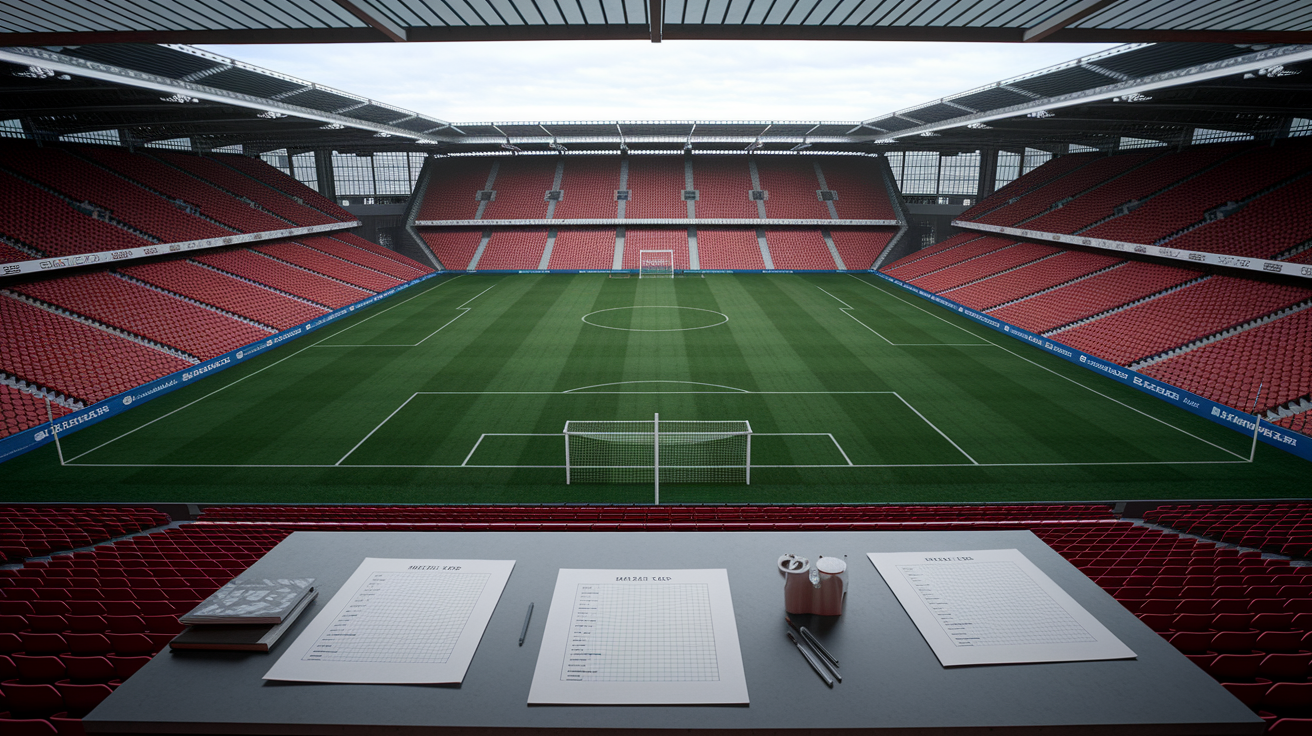
A post-match report is an objective record and a readable account of a completed football match. It’s built to document what happened and explain why it mattered. It serves coaches checking tactics, journalists filing copy on deadline, and administrators keeping official records straight. Get the framework right, and everything else in this guide becomes a matter of filling in blanks.
Here’s a mini-template you can copy right now and adapt for any match:
Match: [Home Team] vs [Away Team]
Competition and date: [Competition], [DD MMM YYYY]
Final score: [Home Score]–[Away Score]
Half-time score: [Score]
Lead: [Winner/result + decisive moment + match context]
Key moments: [Minute, player, event, outcome]
Tactical summary: [Formation, adjustment, effect]
Standout player: [Name + evidence]
Implication: [Table, cup, qualification, or next-fixture consequence]
Here’s how that looks filled in. “Riverside FC beat Town Athletic 2–1 after Maya Reed’s 84th-minute header completed the comeback and secured a place in the cup semi-finals.”
That’s the whole story in one sentence. Everything else in a full report just adds detail, evidence, and context around it. In publication order, a complete report runs through these 10 components.
- Headline and match header
- Lead paragraph
- Match facts box
- Chronological match summary
- Key moments
- Lineups, formations, and substitutions
- Statistics and tactical analysis
- Player ratings and Man of the Match
- Quotes, discipline, and injuries
- Implications and next fixture
How long should any of this actually be? Depends who’s reading it.
| Report Format | Recommended Length | Best Audience | Primary Content |
|---|---|---|---|
| Quick recap | 150–250 words | Social media, fans wanting a fast update | Score, scorer, one key moment |
| Club or news report | 400–800 words | Club website, local news readers | Narrative, key moments, quotes |
| Coaching report | 600–1,200 words | Coaches, analysts, club staff | Tactics, stats, player evaluations |
| Extended analysis | 1,000+ words | Dedicated analysts, archive records | Full breakdown with advanced metrics |
This is the only place in the guide where we lay out length recommendations this way, so bookmark it if you’re switching between formats often.
Downloadable, editable versions of Post-Match-Report-Template.docx, Match-Stats-Template.xlsx, and Player-Evaluation-Template.csv show up later in the adaptation and publishing section of this guide. Those same files export cleanly to PDF for distribution, CSV for stats ingestion into other systems, or a condensed social copy version when you just need the headline facts fast. Worth knowing they exist before you build anything from scratch.
The Football Post-Match Report Structure and Narrative Arc
(((alt-img2)))
A good headline follows a simple formula. Result or consequence, plus the decisive player or moment, all in 6 to 10 words. Something like “Reed’s late header sends Riverside into semis” does the job. It tells the reader the outcome and the reason in one breath, no padding needed.
The lead picks up right where the headline left off. State the score, the competition context, and the turning point in one or two sentences, and keep that first line to 30 words or less. The expanded quick summary that follows can stretch to 50 to 120 words across one or two paragraphs, giving just enough room to set the stage without wandering into play by play territory. Here are five opening formulas that work across most match types.
- “[Team] defeated [opponent] [score] after [decisive moment].”
- “[Player] struck in [minute] as [team] secured [outcome].”
- “[Team] recovered from [deficit] to claim [result].”
- “[Incident] changed the contest as [team] won [score].”
- “[Teams] shared the points after [brief match pattern].”
From there, the body of the report should move chronologically, but not as a minute by minute diary. Group what happened into phases. The opening pattern of play, the first turning point, how the trailing team responded, the decisive phase that settled things, and what it all means going forward. A cluster of three incidents in a five minute spell reads better as one connected passage than three separate bullet points competing for attention.
| Narrative Part | Information to Include | Suggested Length |
|---|---|---|
| Headline | Result or consequence + decisive moment | 6–10 words |
| Lead | Score, context, turning point | ≤30 words first line, 50–120 words expanded |
| First-half account | Opening pattern, early chances, first goal or incident | 1–2 paragraphs |
| Second-half account | Tactical adjustments, momentum shift, decisive phase | 2–3 paragraphs |
| Final takeaway | Result implication and next fixture | 1 short paragraph |
Final Words
In the action, this guide gives a copyable mini-template, facts-box format, timeline, player-rating rules, and a step-by-step workflow to turn live notes into a polished report.
Follow the headline and lead formulas, fill the event log, check official sheets, and use the tables for a repeatable structure on deadline.
Use the downloadable templates to speed production and keep archives clean, so writing a post-match report for football games becomes routine, not rushed. Keep it factual and readable, and you’ll build reports people return to.
FAQ
Q: How to create a football match poster?
A: Creating a football match poster starts by listing essential details (teams, date, venue, kick-off), a clear headline image, readable fonts, high-contrast colours, sponsor logos, and export files sized for print and social.
Q: Where can I get football data for analysis?
A: Getting football data for analysis starts with official league feeds and trusted providers (Opta, StatsBomb), plus public sources (FBref, WhoScored), club match sheets, open APIs, or paid data subscriptions.
Q: Can you write a composition about a football match?
A: Writing a composition about a football match means opening with the result and turning point, then describing key moments chronologically, adding sensory detail, player actions, and a short conclusion about what changed.
Q: What is the best football story?
A: The best football story ties a decisive moment, clear characters, and context into a simple narrative—an upset, comeback, debut, or derby—that explains stakes, emotion, and why the match still matters.
More from Politics
 Events
Most Memorable Underdog Upsets in Olympic History
 Analysis
Set-Piece Mastery: Decoding Corners and Free-Kicks Tactically
 Analysis
Statistical Metrics That Truly Define Midfield Mastery
Analysis